




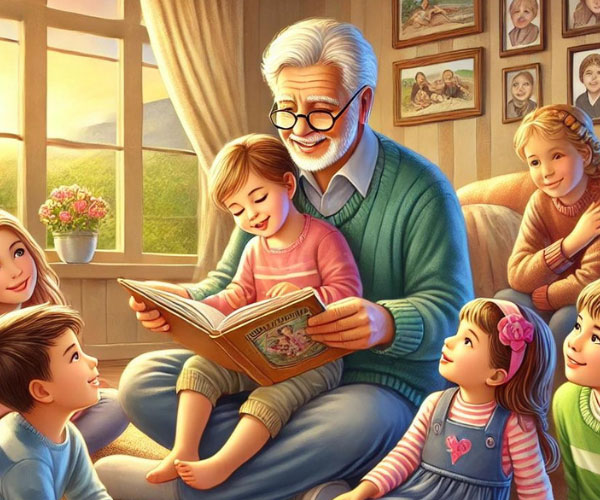
Generations in Harmony: Celebrating the Timeless Bond Between
Grandparents and Grandchildren
“Joys of Grandparents and Grandchildren.” This issue highlights the profound bond between these two generations, filled with shared love, wisdom, and creativity. From thoughtful gifts to meaningful moments spent together, the articles explore the richness of these relationships. Grandparents’ experiences, stories, and guidance become invaluable life lessons for grandchildren, while the youthful spirit of children rekindles joy and purpose in their elders’ lives.
Praveen SN
www.priaashraya.com
Gift for your Grand children
Every time I visit my grandparents they always give me some cash say Rs.500 or Rs.100 whatever they can when I leave from the place. I thought this happens only in family but even in my wife’s grand mom does the same thing by giving us some cash every time when we visit her.The small cash which they give now may not be significant but the cash mattered to us when we were very young and buy something for ourselves from the cash. We will keep that cash in our pockets and not even give it to our parents and tell them it’s my cash with a smiling smirk on our face.
That small gesture done by our grandparents brought us and till date brings us a lot of happiness because we always carry a special bond with our grandparents.
On the other hand, grandparents also feel the same satisfaction and happiness when they gift their grandchildren.
 Gifting cash to your grandchildren is completely fine but though your grandparents can gift you any amount in cash, you cannot accept gifts over 2 lakh in cash at a time, but this is not applicable in investments.
But there are some grandparents who like to gift their grandchildren in a different way apart from cash.
Manas Gupta, 60, wants to make his granddaughter’s first birthday special. He does not want to give her cash or write a cheque. He wants to invest in her name. “This is her first birthday. I want to invest for her education. I do not want to spend on expensive gifts,” he says.
Investing in the name of your grandchildren or making them your nominee of your investments or writing a will can be ways in which you can gift your grandchildren apart from cash.
How to Invest?
In case of investing in the name of your grandchildren:
- The products must allow a third party (grandparent) to make an investment for the child (minor) with the guardians (parents) that operate the account.
- KYC and Aadhaar, PAN card linking will be required for parents as well as grandparents contributing the funds.
- The product features may include a lock in period or a limit on the amount that can be contributed every year.
- Grandparents who want to give gifts in the form of money or investment have to operate necessarily through the parents who are the natural guardians of the minor child. There is no bypassing this.
In case of adding your grandchildren as nominee:
Grandparents can make the investment in their own account and name the grandchild as the nominee. Even in this case, a minor nominee registration needs the guardian’s details.
In case of writing a will:
Grandparents can write a will which has assets bequeaths a portion to their grandchildren
Why investments?
- Investments increase in value over the period of time and it can be utilized by your grandchildren when there is any requirement.
- You can fund your grandchildren’s education by earmarking these investments to their education goal.
- You can reduce the Financial burden of your kids by taking care of your grandchildren’s education expense.
- You can also develop the habit of savings and investments from an young age.
Where to invest?
- Specified mutual funds
- Post office saving products
- Bank deposits
- Equity shares
- Bonds
- Sukanya Samridhhi Yojana (SSY) for only grand daughter
- Public Provident fund for both grandson and grand daughter
Ways to invest?
You can invest either as lump sum when you get your Provident fund payments after retirement or you can also invest periodically like RD’s and SIP investments in Mutual Funds with your surplus amount in monthly pension.
The bonds of a Grandparent and Grandchild are more fun with less expectation from each other. These bonds can also play a vital role in financially securing the future of the grandchild through the grandparent’s resources.
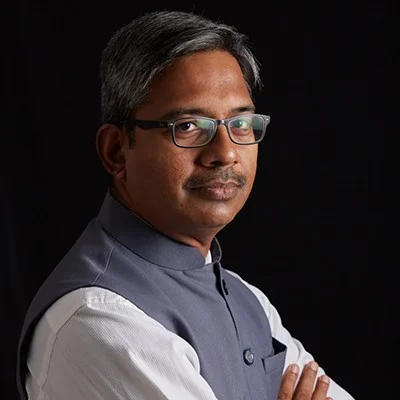
Babu Krishnamoorthy
www.finsherpa.com
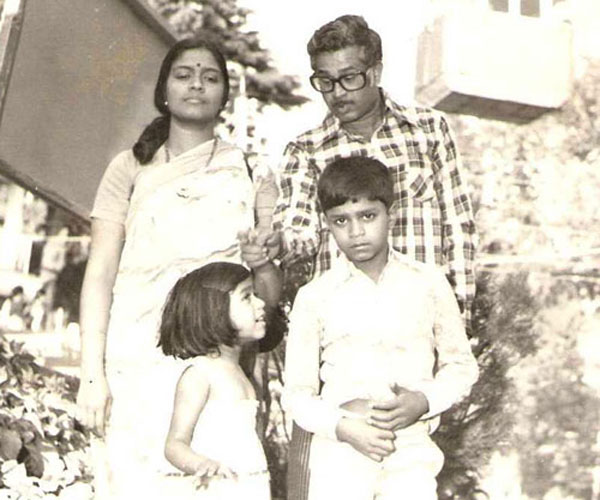
An Independence Month Special: A Journey Back To The Roots
Anirudh Naveen’s grandfather spent his last years immortalising the life of his illustrious ancestor. The author shares his experience of working with him on the memoir and the learnings that came his way in this story of an intergenerational bond.Sometime around February 2021 on an occasional visit to my grandparents’ house in Pune, grandpa expressed his desire to write a book. On such visits, I would generally help him draft emails, besides enjoying long-winding conversations with him on many issues, from contemporary politics to modern Indian history. This time, while recounting anecdotes from his childhood in Kerala, he announced his mission to write a book about his grandfather and sought my support to fulfil this dream.
Grandpa- known otherwise for his stoic attitude- became emotional whenever he discussed his grandfather- P. Seshadri Iyer. I assured him of my unconditional support. We outsourced most of the work and I helped plug the loopholes to ensure that everything unfolded smoothly. It was a rewarding experience. One that facilitated a process of self-discovery and offered some valuable history lessons.
My grandfather, Narayan Rajamani, always emphasised that his retired life was ‘payback time.’ Through his social work, he cultivated an enormous amount of goodwill for himself. But, he also endured many health issues that left him fragile in both mind and body. Yet his willpower never sagged, and around 2016 he embarked on a journey back to his roots. Discussions with close family members and acquaintances- who shared some fleeting memories from their childhood- convinced him about the importance of researching his illustrious grandfather. He compiled nuggets of information into a document and circulated it among acquaintances. The encouraging feedback stimulated him to take the plunge and write a full-fledged book.
Discovering an ancestor
As I discovered over time, P Seshadri Iyer was an extraordinary man for his times. He was a polyglot, conversant in as many as 18 languages. He learnt Russian to read Tolstoy and Bengali to appreciate Tagore’s poetry! He was initiated into the Ramakrishna order in a village in Kerala’s Alappuzha district, named Haripad. Thereafter, Seshadri became an influential figure in his village, gaining renown for his expertise in scriptures and the Bhagavad Gita. Given his facility for languages, he translated books written by luminaries like C. Rajagopalachari and D.D. Kosambi. I grew up reading Rajagopalachari’s ‘Mahabharata’, and was pleasantly surprised to discover that my great-grandfather had translated the original Tamil version of the book into English.
Grandpa wanted the book as a memoir. He wished to intersperse a few anecdotes from life that revealed his grandfather’s compelling attributes. Once, he accompanied Seshadri on a train journey from Madras to Howrah where they shared the compartment with a Christian family. Seshadri launched into a free-wheeling discussion on the tenets of their faith, which soon morphed into a spectacular discourse on Christianity. A stunned grandpa realised that despite being a practising Hindu, Seshadri had mastery over the guiding principles of various faiths.
History Comes Alive
Some anecdotes provided a very graphic portrait of life in Kerala in the 1950s. Grandpa described his grandmother- Ponnu Ammal- as a very strong and capable lady. The book describes her as ‘the fierce Shakti behind P. Seshadri’. She and her mother-in-law would wake up every morning at 4 am to prepare breakfast, not just for the family but also for Seshadri’s students who visited often. A combination of coal-based and firewood-based ovens was used to cook. Lighting both ovens was an arduous process, taking as long as two hours. Ponnu Ammal was not just a splendid cook; anecdotes revealed her sagacity even otherwise. She once confronted a band of robbers who attacked a group of ladies to snatch their gold ornaments. Her calculated assault forced them to retreat empty-handed. A believer in the principle of Annadanam (donation of food), she would offer refreshments to all the patients who waited for an appointment with an Ayurvedic practitioner, who had set up a flourishing practice in front of their house. She believed donating food constituted the highest form of service. Seshadri endured financial issues but funded the education of a school girl staying far away in a Tamil Nadu village. ‘Service before self’ was deeply ingrained in the family.
Grandpa had fond memories of participating in an annual boat race (jalotsavam) in the nearby Payippad village along with a group of back-benchers from his class. The competition was to commemorate the installation of a deity in a local temple. It reflected how the temporal and religious domains were subtly intertwined in rural contexts. I discovered how the community was the pivot around which rural life revolved in the 1950s.
Finding a Purpose
After losing grandma to Covid in 2021, grandpa was emotionally fragile. The book gave him a renewed sense of purpose and he committed himself to it. Consequently, I got to spend some quality time with him. Even while I was busy attending classes or studying, he sent me emails or messages so that I could attend to them whenever I found the time. My inbox is replete with emails sent by him, which will always remind me about his unflinching commitment towards his mission. When I met him in one of our last meetings, he had prepared an elaborate document, with nearly a hundred contacts who had to be sent copies of the books. This must have been a painstaking exercise but he had done it to perfection. He requested me to check for errors, and I was stupefied to find none. He always made it clear that all proceeds from the book were to be transferred to the Ramakrishna Mission, Haripad. The tradition of selflessness he inherited from Seshadri had definitely endured.
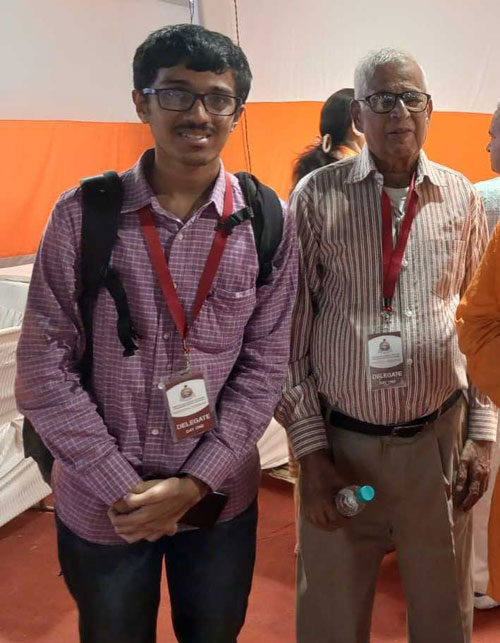
The most humbling milestone for grandpa was receiving a blessing letter from the Most Revered President Maharaj, Ramakrishna Math, Belur. The book begins with this letter. Published in digital format as ‘A Pious Soul: Memoirs of P. Seshadri Iyer’ in October 2021, the book’s printed copies were released in October and November 2022. As the project drew to a close, I mooted the idea of writing grandpa’s autobiography, but his response remained evasive. As fate would have it, he passed away peacefully a few days later in January 2023.
In retrospect, I realize that the book was as much an illumination of his value systems as much as it was a captivating portrait of his grandfather. With each chapter, he ensured that he had effectively articulated his deepest convictions.
In our last moment together on the funeral ground, I silently assured my grandpa’s lifeless body that his legacy too shall be preserved. Another grandson had embarked on a literary journey to immortalize another remarkable life.
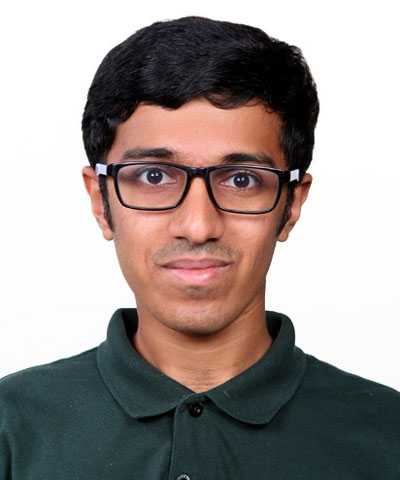
Anirudh Naveen
www.silvertalkies.com
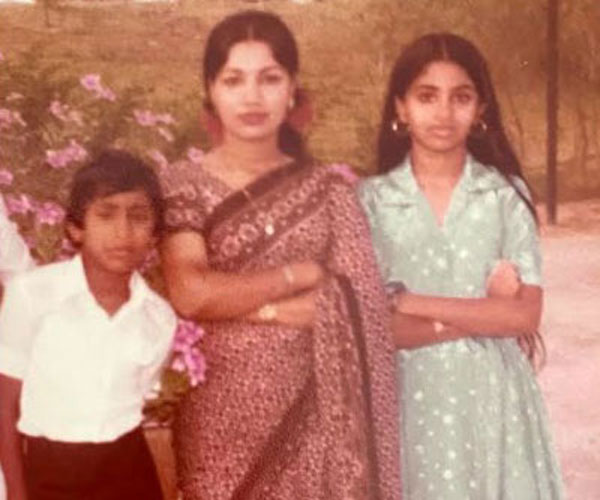
My Grandmother, My Inspiration
On Grandparents’ Day, Faris Kakkodi writes about the inspiring life story of his grandmom who inspires him to be a person with grit and determination.My grandmother’s mother was the daughter of a local landowner. She had received quite a bit of land which she and the ladies from nearby houses would tend to in the day. Her father was a local school teacher and quite respected for being one of the few intellectuals in the small village.
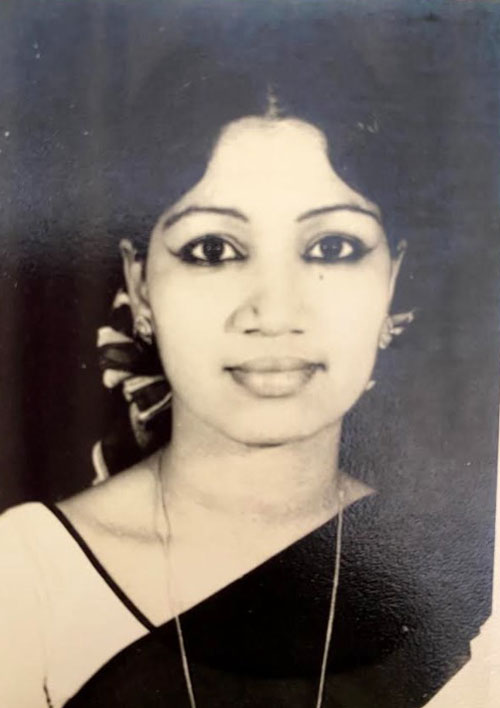 In those days, prior to Independence, childhood usually lasted for only about twelve years for most Muslim children in rural areas, after which marriage was seen as the next step. My grandmother however was quite a rebellious child. She decided to pursue a high school education with the support of her father, while all her other siblings got married early, in their teens.
Life was unconventional in some ways for my grandmother from the start. There were few Muslim students when she was in high school and most of them wore head scarfs. My grandmother didn’t and was often mocked by her fellow classmates for this. She would not bother about it and take it in her stride. As a child from a middle-class farming family, she grew up sharing chores, games and meals with the poorer families in the neighbourhood. A simple banana porridge is the morning meal she remembers. As she got older, several household tasks fell on her. She would get up early in the morning, draw water from the well, water the plants in the farm, have some tea before heading over to school. Money was tight in this simple farming household and after her mother fell ill during her 10th Grade, my grandmother, being the oldest, was forced to care for her siblings. She failed 10th Grade the first time due to this but managed to clear with the support of an aunt who decided to take care of the household chores. My grandmother pursued her classes, determined to clear all the papers and did.
Around the time my grandmother was about to complete Grade 12th, a friend of her fathers suggested nursing. It was a completely unknown field for a family that had mostly been in farming and my grandmother faced resistance from traditional family members, including her parents. She was already 18, too old for a girl to stay unmarried in those times and parents too who wished to see her married. Undaunted and rebellious as ever, my grandmother took a bus to Calicut and enrolled in the Calicut School of Nursing with dreams of having a better life. She was the first female college graduate in her family!
The nursing school brought about more than independence to her life. It also steered her in the direction of her companion. At school, my grandmother became friends with a girl called Liala and a boy called Mohammed. During her second year of nursing, Mohammed passed away due to typhoid. Heartbroken, Liala and my grandmother collected his clothes from the hospital room to send them along with his body to the family with the help of the hospital staff.
And that’s how she met Berran Koya, my grandfather and Mohammed’s older brother. He had got Tuberculosis (TB) earlier but had recovered miraculously. When they first met, he came and asked my grandmother for an injection. Gradually, he started coming regularly, making up several excuses to meet her. He also started sending her letters under various names.
The couple decided to get married but there were a number of hurdles they still had to overcome. Koya had suffered from TB and was still under ongoing medical care and my grandmother’s parents opposed the relationship, including going to the court to get a restraining order. It was unusual for a Muslim woman in those days to be in a relationship and there were enough taunts from neighbours and others around her about it.
Seeing the problems surrounding them, the couple postponed their marriage but continued staying in touch. My grandmother finished her nursing degree and starting receiving many marriage proposals, including from many wealthy families.
But she stayed firm in her wish to marry my grandfather, standing up to her parents and the society at large with a strength that is praiseworthy for the times she lived in. Finally, after her family had pressured her enough to accept marriage proposals as she quietly supported my grandfather through his illness and operations, my grandparents were engaged with support from Berran Koya’s brothers. They got married in a year’s time.
Life wasn’t easy as my grandfather kept falling ill but the struggle to be together and the love they had for each other kept them working through it together. Soon they had two children, my aunt first, followed by my father.
When I used to live in the US as a young child my grandmother seemed very typical – the grandmother who would bake cupcakes and visit us once a year from India. But, as I moved to India I slowly saw her in a different light: as a strong independent woman, a caring mother and a loving wife, things I would have never learned about talking to her on the phone. I had always heard snippets of her life from my grandfather and herself when we would sit outside on the balcony and talk. As I now have had the opportunity to hear her story in full I feel a sense of pride and responsibility after listening to how she overcame many struggles and achieved the success she did.
Faris Kakkodi
www.silvertalkies.com
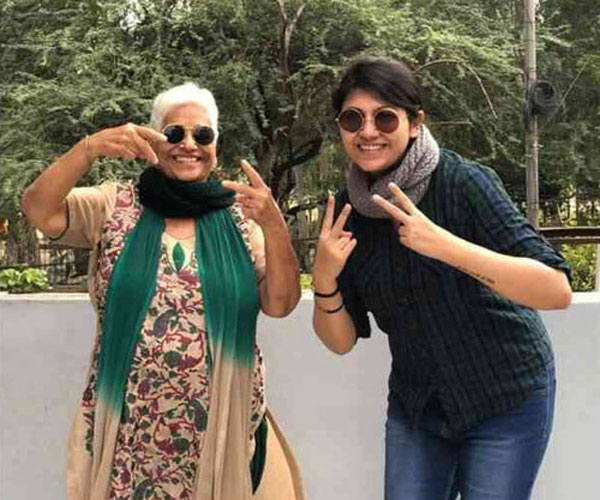
The Best Ways You Can Bond With Your Grandparents & Share Happiness
Bonding with your grandparents may never be easy, but have you ever tried to fill in the gaps? Richelle Adarsh, a teenage changemaker keen on cross-generational learning, shares with us some ways of filling generation gaps that make it a win-win for both generations.Until I was 11 years old, my grandparents were almost like my roommates- we’d watch TV together, take naps together, eat together- and I wasn’t complaining. However, they moved out soon after and I got busy with school, extra classes, and my friends, just like any other teenager. I made sure to visit them on the weekends and stay over, and I wanted to use this short period of time to make up for the five days I was away from them. Want to know how? By indulging with them in activities that were enjoyable for both my grandparents and me. These activities helped me maintain the bond that was under threat of growing weaker due to distance.
Here are some ways that I bonded with my grandparents at home. The younger generation can try these methods online and knit a close bond with their grandparents even if they don’t live together or close enough to be able to visit.
Grandparents are the closest means to time travel
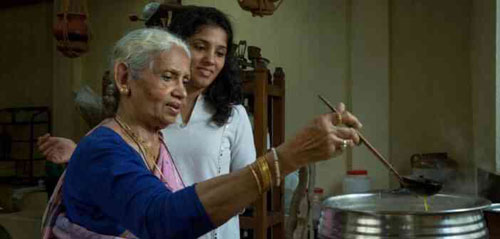
And that’s free entertainment for hours on end. So why would you give up an amazing opportunity to vicariously experience what it was like during the age of zero traffic, waiting weeks to receive letters which were the equivalent of today’s text message, or learning how they survived in a world that we would now consider extremely boring? Grandparents would gladly narrate their entire life story, and even if this is the seventh time you’re hearing about it, there’s a particular novelty to it, be it a tiny new detail that you had previously missed out on, or a new layer of meaning you’ve unraveled as you have grown older yourself.
Learning grandparents’ special recipes and kitchen hacks
It is common knowledge that the food that our grandparents make is unsurpassable. We may never be able to do justice to their cooking, but we can attempt to learn these recipes and their history, or certain tried and tested kitchen hacks that have come in handy over the years. Perhaps you could co-author a cookbook with your grandparents or help them write one like Ummi Abdulla’s granddaughter Nazneen did, filled with some delicious heirloom recipes to be passed down from generation to generation. Another great kitchen activity would be collaborating with your grandparents to give their traditional recipes a modern twist!
Exchanging tips on fashion and styling
When I was younger, I found immense joy in pestering my grandmother to let me “style” her beautiful, long hair only to tangle it up into an inextricable mess. I don’t think it’s necessary to put our grandparents through this torture to bond with them. However, a fun dress-up session– learning how to drape a saree or other traditional clothing, and in turn, maybe giving some of their clothes a modern twist, or helping them shop for clothes online would certainly evoke laughter while judging each other’s fashion choices.
Helping them navigate the virtual world
Besides helping them set up Whatsapp, Instagram or Facebook, helping them navigate around websites like Pinterest, or even Spotify could encourage them to explore their interests. It is also a great opportunity to collaborate by making mood boards or maybe even a playlist of your favorite songs together! For inspiration, check out Mr & Mrs Verma on Instagram. Their granddaughter introduced them to it during the lockdown and they’ve been slaying it ever since.
Passing on niche skills
A grandmother knitting a sweater, or a grandfather tending to his garden may be as stereotypical as it gets, but these skills, along with various others, such as crochet or even carpentry are fading away. A short lesson every day might just save these dying art forms and you could help them by finding new designs, patterns, or projects that would give them the pleasure of creating something for their grandkids, or better still, work on a project together. Check out 75-year-old Asha Puri’s knitting venture with her granddaughter Krittika Sondhi – With Love From Granny.
These activities could be a melange of sharing knowledge– both new and old, bridging the gap between generations that has widened with the advent of technology. Rather than being ignorant about the intergenerational gap, you can use it as the quintessential tool to create new memories. So take some time off your (supposedly busy) schedules and prepare to not just strengthen this bond, but also discover yourself in the process. You may learn a thing or two (or more) from the grandparents and they may open a new window because of you!

www.silvertalkies.com
Grandparents: The Timeless Stars in Our Lives
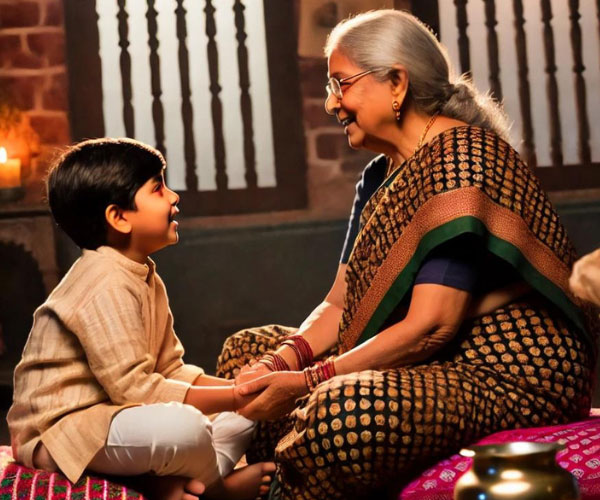
The bond we share with our grandparents often transcends the relationships we have with our parents. Through their love, wisdom, and stories, they leave an everlasting imprint on our hearts.We all have a special attachment to our grandparents. Sometimes, the bond we share with them feels even closer and more precious than the one we have with our parents. I still vividly recall my deep connection and friendship with my grandmother—my mother’s mother. She was the person I was always drawn to, someone who taught me love, compassion, caring, and giving. Her warm, radiant smile had the power to light up thousands of lives, and she had the purest heart of gold.
To me, grandparents are like stars. We may not see them every day, but we can always feel their presence. They hold our hands for just a short while, but they remain in our hearts forever.
A dear friend of mine once described the love between a grandparent and grandchild as a “laughing love”—a bond full of joy, free from the strictness or pressures often found in parent-child relationships. Grandparents contribute to raising a child, but without the weight of responsibility that parents carry. This allows them to experience and share the purest form of joy in the relationship.
Grandparents are often the storytellers of the family, the keepers of traditions, and a link to a time when life moved at a gentler pace. With a little more silence, a little more wisdom, they impart old stories that children need to hear—to understand who they are, where they come from, and where they belong. Children become characters in these stories, essential threads in the tapestry of family history.
Grandparents know best, and for good reason. Not only do they want the best for us, but they’ve lived long enough to have faced many of life’s challenges. Even if they haven’t been through a particular situation, their years of wisdom give them the ability to offer valuable advice on everything—from life and money to relationships and beyond.
Our lives are undeniably enriched by the presence of our grandparents. The bond between grandparents and grandchildren is one that never fades. They are the foundation upon which future generations are built, the bridge that connects the past to the present, and their love and influence carry forward, long after they’re gone.
Bhavani Sundaram
Resident
Ashiana Nirmay
A Year of Rediscovery: My Time in Playschool with Govind
Joining my grandson’s playschool at 60, I re-experienced childhood joy, learning, and play. From art to picnics, it became the best year of my life.
When my grandson Govind was 2 years old, we put him in a playschool. But there was a catch—somebody had to go with him. The rules were that someone had to be with him as an attendant.
Wow. I volunteered.
At age 60, I found myself attending nursery school. It was great fun! Every morning, we would hurry to be on time. Upon reaching school, we first said a prayer, followed by a PT class to start the day in a healthy way.
Next was the art class. We drew houses, the sky, and mountains. We painted them in weird colors.
We loved the storytelling class the best. Our teacher had endless new stories about animals, plants, fairies, and elves. She created a new world for us every day.
Tiffin time was great fun. We ate all the goodies—potato wafers, lollipops, and every delicious treat we could think of. There was even a nap time when we got to rest for a few minutes after all the hard work we put in.
Singing poems was also interesting. They didn’t allow us to sing Bollywood songs, but we learned “Twinkle, Twinkle Little Star” and “Humpty Dumpty”. My grandson Govind felt very sad when Humpty fell and broke his crown. “Why does he fall down every day?” he wanted to know.
I relearned the alphabet and my numbers—I had forgotten them by now. Playing in the sandpit was the best; we made tunnels and palaces.
One day, they even took us on a picnic to a farm, where we saw how fruits grow on trees and visited cows and calves.
Oh my God! It was the best year of my life. I relearned how to play and sing with abandon. Only one thing was wrong—Govind told me, “Dadi, why don’t you wear normal clothes like everyone else? Shorts and a t-shirt…”
Asha Uberoy
Gurgaon
Quadruplet Journey: Supermom’s Remarkable Story
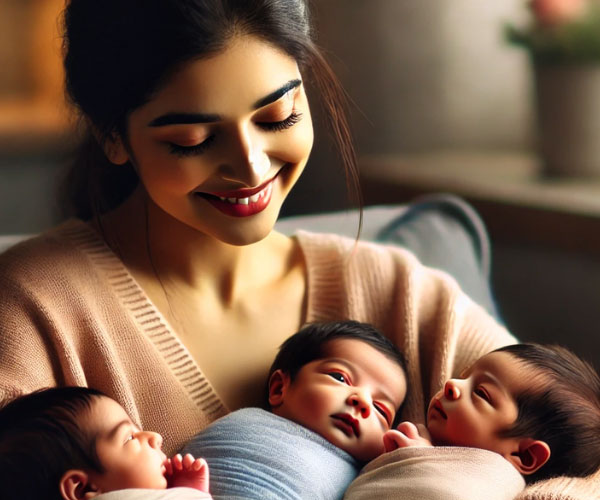
Shruthi’s life with her identical quadruplet girls, born at 850 grams each, is a testament to her supermom strength, with challenges met through love and support.For every mother, her child is one in a million. For my daughter Shruthi, her identical quadruplet girls are one in four million. If supermoms are those who excel at raising kids while pursuing a career, Shruthi is a super-duper mom!
These quadruplets, naturally conceived, averaged 850 grams at birth, each so similar that it was hard to tell them apart. Though they shared the same womb and blood group, it’s a myth that they all cried and fed together. The first few years were quite challenging and demanding—physically, emotionally, and financially. Imagine the number of diapers one needs to change every single day until they are potty-trained!
When they were born, Shruthi and her husband Vivek had no idea how they would handle it all, but with immense help from a dedicated team of doctors at Apollo Hospitals, Chennai, and support from Vivek’s family and two full-time nannies, they navigated through these tough and busy initial years. When the quads were young, Shruthi and Vivek were on a fifteen-minute sleep cycle. The couple’s sleep deprivation lasted almost two years until the kids started pre-school and things eased up a bit.
Schooling was no easy task—getting them ready and ironing four sets of uniforms every single day, managing their school projects, and balancing hobbies and interests beyond academics was overwhelming. In 2014, the four of them featured in lead roles in a Tamil film titled “Enna Sattham Indha Neram,” which entered the Limca Book of Records for being the first film to cast real-life quadruplets in the same plot.
Shruthi says every day was unique when raising her daughters, and seeing them smile at the end of each day has always been fulfilling. The parents hope to see the girls grow into kind, responsible, and successful individuals in whatever they pursue. Now, the quad girls are preparing to embark on their career paths, aspiring to be performing arts professionals specializing in music from a UK-based university. I wish them the best.
R.B. Naik
Resident
Manasum
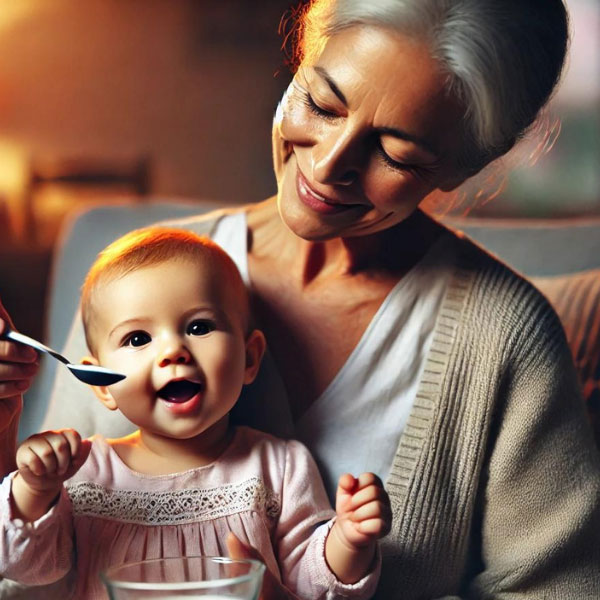
The Joy of Bonding with My Granddaughter: Six Months of Pure Bliss
The early days of bonding with my six-month-old granddaughter show that love, affection, and mischief lay the foundation for deep connections.This may sound like the outpouring of a grandmother who is totally besotted with her six month-old granddaughter. However, with a little insight, one can realize that the little, “trivial” things we do for and with our grandchildren go a long way in creating a bond with them.
A six-month-old? Does it make you wonder—what bonding experience can one have in a span of six months? Well… doesn’t the process of bonding start the day a baby is born?
It is said that human contact is necessary for establishing a bond with anyone.
So here goes…
I am privileged to have been the first one to have my granddaughter on my lap, to put her to sleep, and to keep her close to me so she could feel human warmth the day she came into this world.
Now, who says feeding is mundane? There’s so much happening here! My granddaughter becomes very playful when given the bottle. She pushes the bottle out, sticks her tongue out, and makes a rumbling sound while spraying milk in a mist. She knows we find it hilarious, and she does it more and more. Then, I resort to pseudo-scolding to make her take the bottle. Her eyes sparkle with mischief—it’s fascinating.
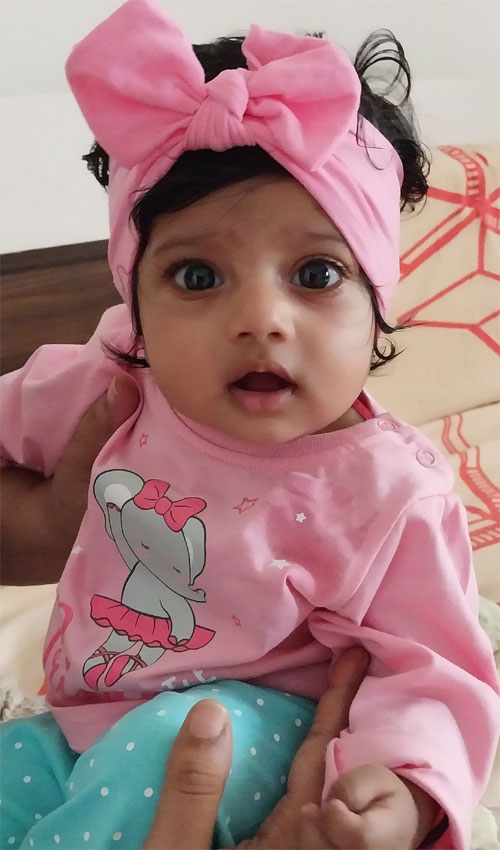 You might wonder what I would do if she displayed the same mischief while being fed porridge? Well, you’re in for a surprise. She laps it up quickly and, in her eagerness for more, grabs the feeding spoon and takes it to her mouth herself! It feels like a rollercoaster, doesn’t it?
Singing… doesn’t she love it! I sing to her, and she stares into my eyes without batting an eyelid, as still as an alert deer. That’s her concentration.
She also loves to rock, sitting on my lap. She pushes her feet to rock herself, giving me a cue to keep rocking.
Everyone has a pet name for their grandchildren. I do too. When I call my granddaughter by her pet name, she rewards me with a toothless grin and swats her hands and legs vigorously! That’s her way of showing she loves to be called by her special name.
The bonding experience varies at different stages of a baby’s growth. But the most fascinating and endearing experience is at the early stage. We find ourselves cooing and talking gibberish, while we get to hear the baby’s “ooohs” and “aahs.” Are we really communicating with each other? Most definitely. Are we bonding? A BIG YES!
Words aren’t necessary—actions and emotions do that at a deeper level.
**BONDING WITH A N A G H A**
A – Affection
N – Naughtiness
A – Alertness
G – Gaming
H – Heartiness
A – Alacrity
Aren’t we all blessed to forge a bond with such a bundle of joy that God has bestowed upon us?
Rajeswari Vijay Kumar
Resident
Manasum
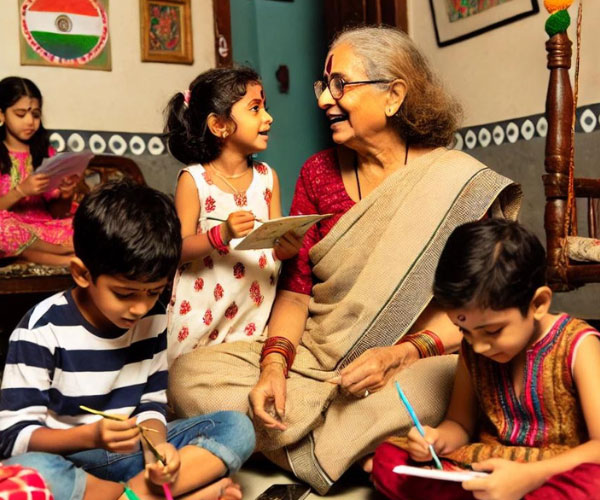
The Priceless Treasure of Grandchildren
Grandchildren bring boundless joy, creativity, and laughter into the lives of their grandparents. From heartfelt poems to playful moments, the bond between grandparents and grandchildren transcends generations, leaving behind cherished memories and a lasting legacy.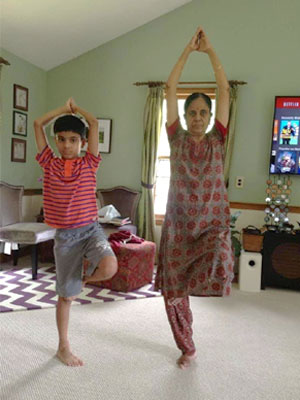 “The simplest toy, one which even the youngest child can operate, is called a grandparent,” wrote Sam Leverson. The grandparent-grandchild relationship illuminates one of the purest forms of human love—a love that is unconditional and devoid of judgment. The role of grandparents in grandchildren’s lives is undeniable, and this has been true throughout the ages.
However, in the 21st century, the role of grandparents is even more amazing and admirable because of the many leaps and sacrifices they make just to fulfill the role. This is especially true as more and more families are spread around the world.
My two children, a daughter and a son, went abroad for studies, and with good jobs, their lives were settled. When the arrival of my grandchild was announced, my grandparent instinct was filled with joy. We, both grandparents, landed in the U.K. for the birth of my two granddaughters. The joy of bringing them up and looking after the tiny doll-like baby was no less demanding, but the pleasure of seeing them smile, play, and grow up was absolute happiness a grandparent could conceive. Feeding, bathing, singing lullabies, making cradle decorations, and putting the baby to sleep was done with a devout fervor that brought immense joy.
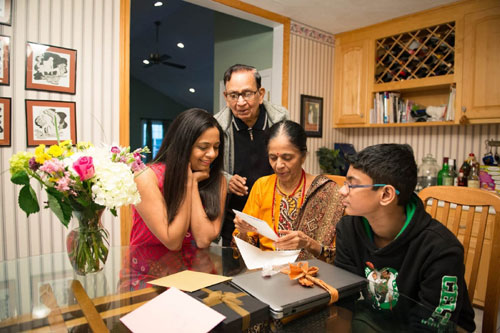 Traveling more often to the U.K. and the USA, where my daughter’s and son’s families lived, gave us delightful experiences and time to be with our grandchildren.
It can be of no surprise to anyone that grandchildren are grandparents’ fondest treasure. Grandchildren lead their grandparents into rediscovering the joy and bliss of that enchanted place in their little hearts. The light that could be seen in the twinkling glow of their eyes, the honey in their lisping words, the fun and frolic in their every action was a great celebration for grandparents like me and my husband. He would teach them moral stories and pamper them with chocolates. He would take them to temples and teach them songs of devotion. We enjoyed the company of my granddaughters in the U.K. and later my grandson in the USA during their summer vacations. Their days were spent in endless activities, and their creative expression was fanned easily by our attention and encouragement. It was a glorious time of writing poetry, painting, singing, and dancing, drawing inspiration from one another. We freely explored nature and fantasy, people and objects, the real world and trips of endless imagination.
I was amazed that what began as a means to constructively engage my grandchildren resulted in a set of poems that were insightful and truly a reflection of the child’s heart. Myself being a writer and a Haiku poet, they were much influenced by my writings. It was as if the same genes they inherited started writing Haiku and short poems. We put together a small booklet by Anika titled “Dew Drops” and the younger granddaughter Amita’s booklet as “Honey Drops.” They were in seventh heaven when their booklets were also released along with my book titled “UK Season’s Heartbeat,” one of my Haiku books. These two booklets even today not only give me personal memories of my granddaughters but also provide a slice of childhood creativity for anyone to savor at any time.
Amita, the younger granddaughter, would write funny free Haikus: “I saw a fox With chickenpox Carrying a medicine box.”
She would show it to me. Though it appeared to be silly, it put everyone in the family into limitless laughter. My encouragement drove her creativity to make the most insignificant things seem lovely. She wrote about parents, grandparents, sisters, ice cream, the moon, honey, and dandelions! Her poem about a story in three lines goes like this: “I am seven, she is seven Together we make A story about heaven.”
It astounds me that a little girl could make a three-line poem so fascinating. I enjoyed their childhood and their innocence, which leaves nostalgia in my heart. They showed their talent, dancing to the tunes of my Deepavali song, and brought laurels to me.
We spent more time in the U.S. with my daughter’s family too and enjoyed bringing up Aditya right from his birth. As he grew, he had a playful curiosity and joyful perspective in whatever he saw, always coming up with questions from his childlike world of innocence. He filled our loneliness and boredom with his Spider-Man and Batman stories. His bedtime was filled with my stories, which were later published as a collection of children’s stories. My little grandson’s musings brought freshness and energy into my life.
One day, my grandson and I sat for a painting session. He sat with his paintbrush and colors, trying to cope with my instructions on holding the brush and using the color scheme. Suddenly, after some irritation, he said, “Guess what, Ajji (grandma)? Your brain is YOUR teacher, and my brain is MINE, okay? So I am going to do it my way now.” This did not seem like impertinence to me. I wondered at his words and learned that there was wisdom and maturity in them.
As his interest developed in art, our relationship grew closer, and it became a means of fun and frolic. To my question about what he conceived about the human body, he wrote: “The human body has two doors… the Mouth is the front door and the Butt is the back door; Eyes are the security cameras, the Stomach is the family room where everything rests and mingles, the Heart is the Living room where people come and go, and some always stay; the Nose is the Air conditioner; the Intestines are always processing things; the Ears are always phones, and the Pee-pee is the bathroom!”
I was stunned by his creative potential, thinking so logically and creating a “Human Home” with all parts of the body. I felt wonderstruck and dumbfounded at his version of the human body.
We grandparents have a lot to admire in little kids, and we feel our childhood coming back in great packages of pleasure.
My yoga sessions in the morning would baffle him, and he showed eagerness to learn. He would hold his nose and learn pranayama and asanas too. Our favorite pose was Vrikshasana, where he could stand for more time and feel like a winner. Playing with him in shuttlecock and basketball, I felt younger in spirit and healthier too. We both would stroll in nature and collect colorful fall leaves to decorate.
There is no doubt that grandchildren are our treasures who make our lives glorious.
To sum up, grandchildren are dots that connect the lines from generation to generation. They are the legacy we leave behind, a piece of us that will live on. They are the best reminders of the beauty and innocence of childhood. The love between grandparents and grandchildren is timeless and knows no boundaries.
G R Parimala Rao
Resident
Manasum
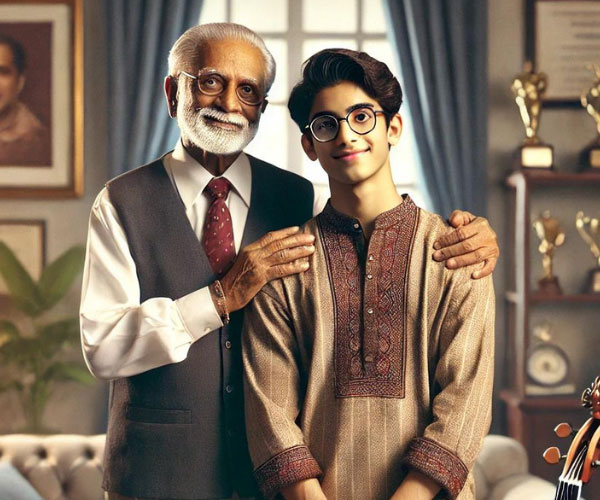
A Grandparent’s Pride: Aditya Krishna’s Exceptional Journey
Grandparent Dr. A. Sreekumar Menon celebrates his grandson Aditya Krishna’s academic and humanitarian achievements, highlighting his dedication to science and community service.Grandparents are generally more affectionate towards their grandchildren. In our case, we cherish our only grandson not only for his brilliance and excellent character but also for his outstanding achievements. Our grandson, Aditya Krishna, now 17 years old, recently completed 12 years of schooling in Houston with flying colors. He has commenced a graduate course in Neurological and related sciences at Texas University in Dallas, having received scholarships.
Aditya has been honored with over 14 awards, including titles like “Rising Star for Academic Performance” and “Vibhuti Star” from the International Sathya Sai Centre and his school for social service. Even at a young age, he demonstrated a passion for science and solving community problems. In the 5th standard, he discovered a method to filter excess fluoride from drinking water using inexpensive, locally available materials like waste vegetable and fruit peels—an innovation that benefits poor villagers.
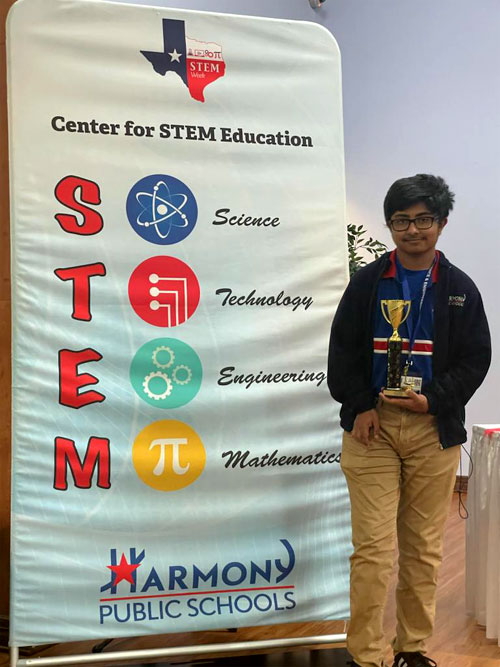
In Mexico, where low birth weight was prevalent, Aditya studied Hispanic women and identified excess fluoride in drinking water as the issue. His findings were published in the International Journal of Environmental Research and Public Health, in collaboration with two members of the Baylor College of Medicine faculty, where he was the senior author. Aditya was also invited to present his paper at an international public health conference in Boston, making him the sole school student among scientists.
Baylor College of Medicine recognized his exceptional knowledge and skills by offering him a one-year internship, typically reserved for graduate students. He was given the unique privilege of shadowing doctors, attending lectures, and participating in patient examinations. This early encouragement for professional growth is a testament to the U.S. system’s support for young talent.
Aditya aspires to become a socially committed expert doctor and medical scientist. His academic brilliance is complemented by his character, which has been highly praised by his school and other agencies. Despite being raised in the U.S., he follows Indian customs, practices vegetarianism, and shows reverence towards elders. He actively participates in cultural functions at the Sathya Sai Centre and is a trained tabla player.
We wish and pray that he continues to unlock his full intellectual potential and remains an asset to society wherever he goes. We believe these achievements are a gift from the Almighty.
Dr. A. Sreekumar Menon
Resident
Serene Urbana
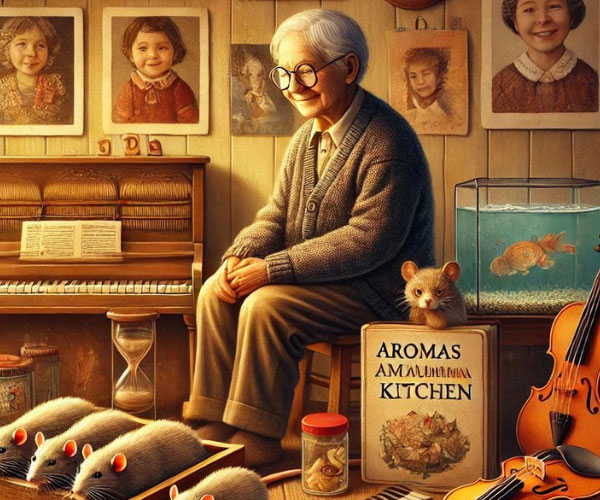
Adorable Grandchildren: Joys of a Grandmother’s Life
From nurturing values to making rat masks, my journey with seven grandchildren has been filled with love, support, and unforgettable memories that have enriched my life and theirs.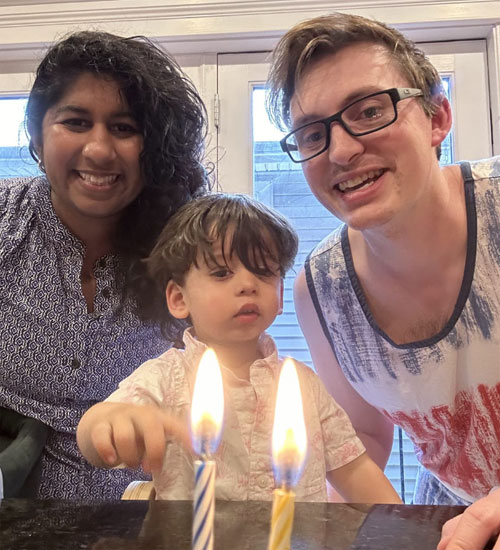 Grandchildren are truly “stress busters.” The bond between grandparents and grandchildren is both emotional and enriching. We, as grandparents, play multiple roles- mentors, role models, and emotional pillars for the younger generation.
I have been blessed to witness each stage of my grandchildren’s growth. Despite living in the USA, I have visited them 27 times, ensuring that I was there when they were born and as they grew from toddlers to adults. Through this journey, I imparted life lessons, guiding them with timely advice, teaching values like honesty and hard work, and sharing our family traditions.
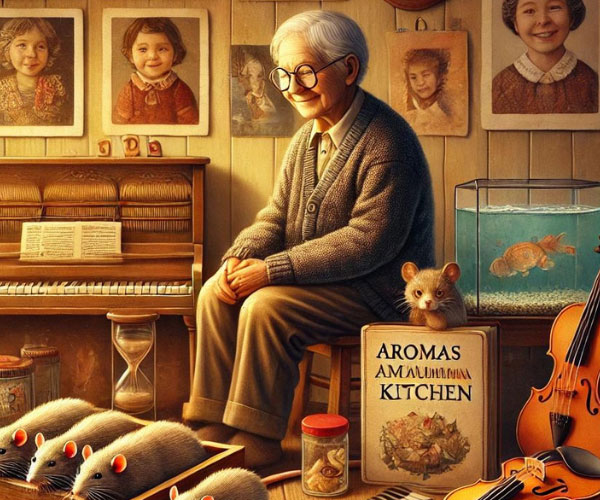
One of my fondest memories is with Divya, our first grandchild. When she came to India, I took her to “Udavum Karangal,” an orphanage in Chennai. This experience moved her deeply, and she returned the following year to teach at a school for underprivileged children in Bangalore. There, she directed a play, “The Pied Piper of Hamelin,” involving all 28 children in her class. I still remember making those dozen rat masks for the play! Today, Divya works in Chicago after completing her MBA from Northwestern University.
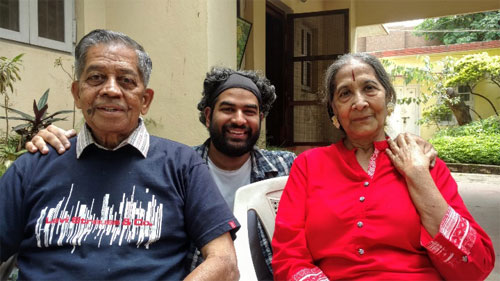 My eldest grandson, Ishwar, shares a strong emotional bond with us. A passionate pianist and quizzer, he continues to impress us. Missing my cooking after moving to the US, he inspired me to create a booklet for my grandchildren titled “Aromas from Ammama’s Kitchen at Prithvi.” Ishwar is now pursuing his PhD in Immunology at Baylor College of Medicine, Houston.
Our second grandson, Avinash, has been involved in remarkable academic pursuits, including a neuroscience project in India focused on stroke and epilepsy patients. A cybersecurity enthusiast, Avinash also has a flair for music, playing the keyboard. Watching him ‘fence’ is always a delight.
Namita, our second granddaughter, is a confident, independent woman who graduated in Biomedical Engineering from Duke University. While balancing work in Boston, she is pursuing her Master’s degree. An artist at heart, she plays the flute and enjoys art, much like I do.
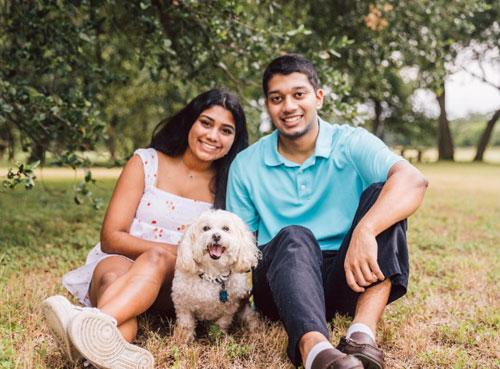 Ashwin, our third grandson, is not only intelligent but also a talented violinist and quizzer. He is currently studying medicine at Brown University, aiming to become a radiologist like his great-grandfather, a radiologist from Edinburgh honored for his service during World War II.
Viren, the youngest grandson, holds a quiet dignity. He was fascinated by the fish in his home aquarium as a child, and I created a set of 26 cards, each featuring a different fish and corresponding alphabet letter. It was through these cards that Viren learned his ABCs. Now, he has completed a computer science course at the University of Texas at Austin.
Nina, our youngest granddaughter, is focused and passionate. She not only dances but also sings Western music, often performing solo at functions. The first in our family to pursue business studies, she is a student at the McCombs School of Business, University of Texas at Austin.
With each of my grandchildren, I have formed unique bonds, helping them with their projects and encouraging them in their endeavours. As someone who has been in education for over 24 years, I’ve shared not just love but also wisdom and guidance. Spending time with them has kept me intellectually and physically active.
And now, my two-year-old great-grandson, Reyan, with his adorable antics, is my ultimate stress-buster.
K. Nalini
Resident
Serene Urbana
The Unexpected Joys of Late Grandparenting
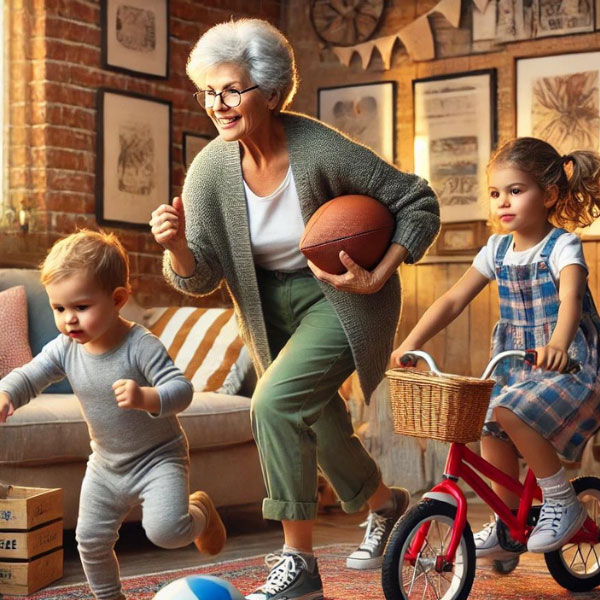
Rupa Ramamurthi, reflecting on her later-than-usual grandparenting journey, recounts adapting to new parenting norms and the joys of bonding with her American-born grandchildren. Despite cultural differences and challenges, she embraces every moment with enthusiasm and love.Doubts plagued my mind. Would I be fit and sprightly enough to play the grandparent’s role? Thankfully, yes. Years of leading an active life are paying off. However, other challenges unfolded. The Mom and Pop Classes, attended by the two sets of parents, had coached them in the dos and don’ts of parenting. When I landed in LA for Priya’s delivery, I was given a bunch of reading material, which I called New Age American Parenting. None of the time-tested traditional Indian practices had a place in it—no application of oil, no kajal or tika, or gold ornaments traditionally gifted and put on the newborn. I went through the notes and internalized them, as they had to be followed strictly.
Once I accepted the new norms, I began experiencing the joys of grandparenting. The cooing, the first smile of recognition, the creeping, crawling, teething, and the first steps— each milestone delighted me. I missed my dear husband, who was not there with me to experience these immeasurable joys. Along the way, I realized that different skill sets were needed for newborn infants, toddlers, and sure-footed, confident three- and four-year-olds. The years spent at preschool and daycare in the US had given the little ones wide exposure. Books, toys, travels, and socializing with their peer group had made them quite smart. If I thought I could “teach” Neil and Eliana, I had to think again. I was not quick enough to match the pictures or identify the animals. By the time I donned my glasses and looked at the jigsaw puzzle, it was already solved. As for accent, pronunciation, and vocabulary, my British English was taking a beating. Paati learned to say ‘Sure’ instead of ‘Yes’ and ‘Band- Aid’ instead of ‘Plaster’. Often, I took the Time Machine from the Dinosaur Age through the Solar System to the Futuristic Martian Age. I read out and dramatized scores of stories.
I managed to pass the physical fitness test too! I played kickball, throwball, basketball, and hide-and-seek. I jogged up hilly terrains and walked fast behind the zip-zap-zooming fouryear- olds on their bikes or scooters—around the house and garden, on the sidewalks, and in neighborhood parks. On the food front, I learned to toss up a salad and make guacamole while my grandkids learned to relish chappatis, chole (with zero spice), and chaas.
Through this gamut of experiences, bonding develops. A lot of learning happens when there is a jugalbandi of ballet and Bollywood steps. Chasms of differences are overcome by bridges of love.
Rupa Ramamurthi
Resident
Serene Urbana